ServicesPool Drain and Refill
Pool Drain and Refill in Sun Lakes
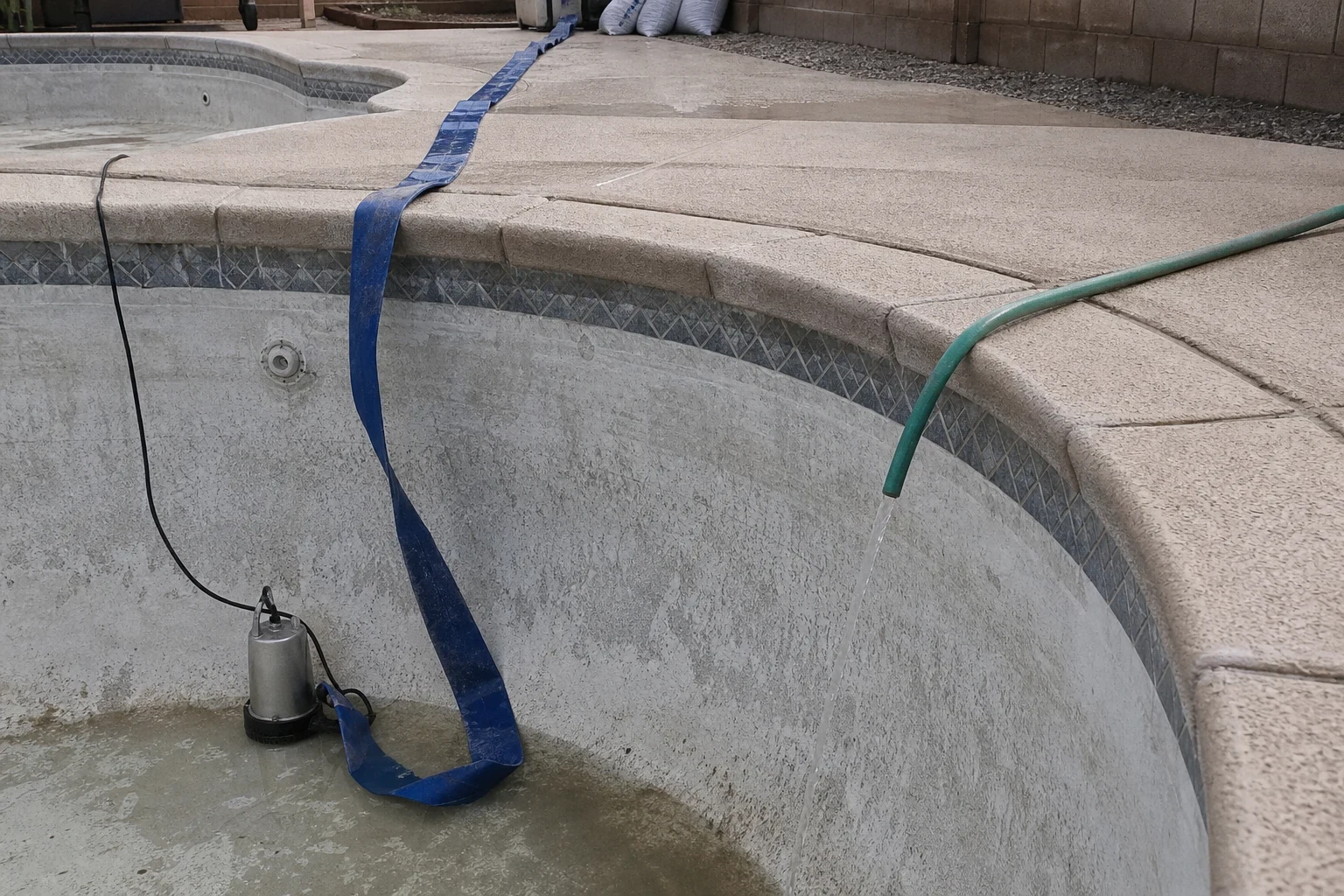
When your water is too worn out to balance, chemicals stop helping. We drain the pool with a safe setup, send the water where it is allowed to go, refill it and bring the new water into balance before we leave it to you.
When fresh water is the real fix
Every time pool water evaporates, the minerals stay behind. Add chlorine, stabilizer and desert dust week after week, and the total dissolved solids keep climbing. After a few years, the water fights you. Chlorine works poorly, scale builds fast and the water can look dull even when the test strip says it is fine.
A drain and refill resets all of that. It is not something to do on a whim, though. An empty pool can be damaged by heat, by groundwater pressure or by a pump left running dry. A drained pool is also a deep, hard-sided hole in your yard. We plan each drain around those risks first, then around getting your water back as fast as we safely can.
What the job includes
Water test before we start
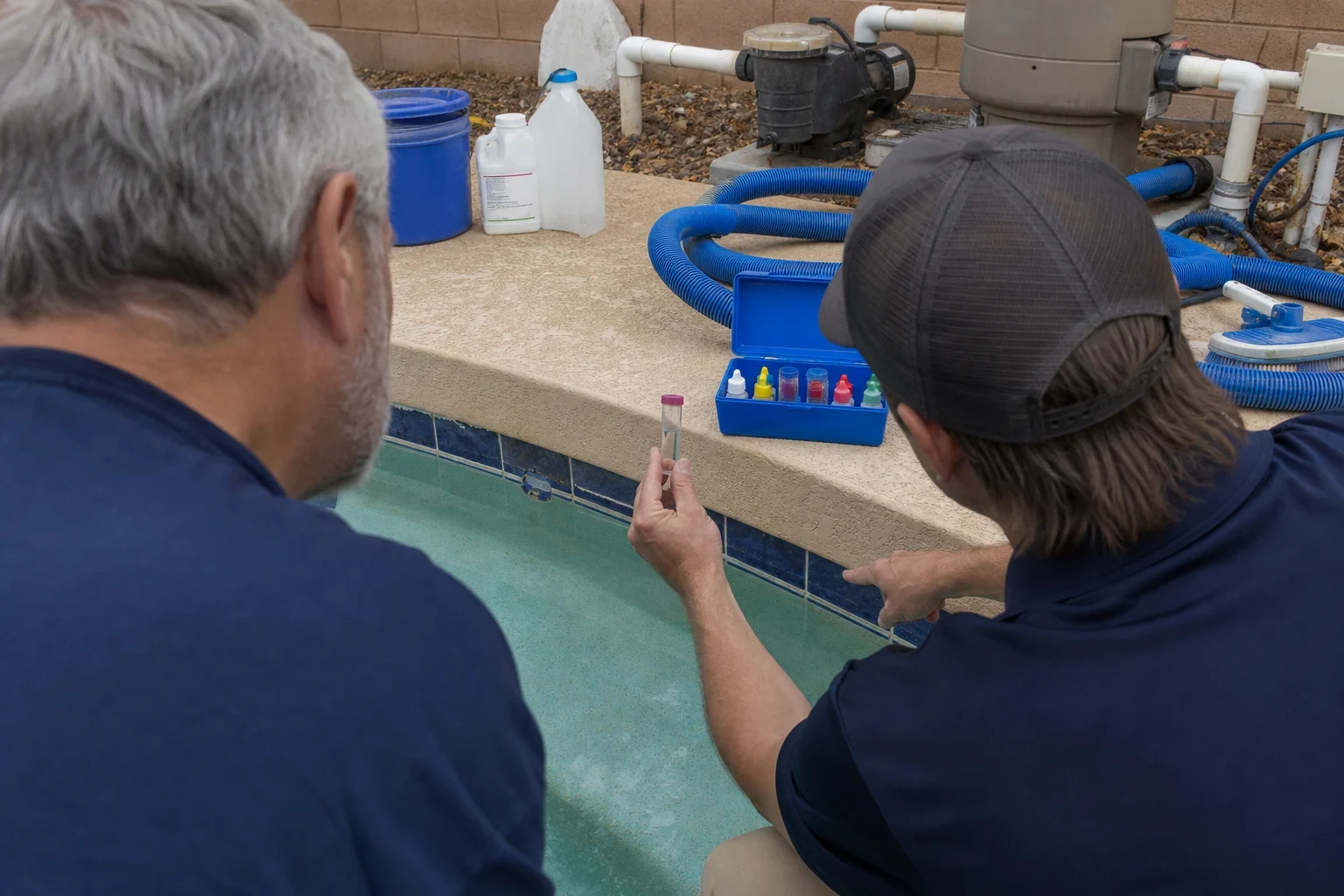
We test TDS, calcium hardness and stabilizer so you know the drain is actually needed. If the water can still be saved with treatment, we tell you.
Equipment shut down at the breaker
We turn off the pump and heater before the water drops. That keeps the pump from running dry and burning out its seal.
Submersible pump on a protected circuit
Our pump runs on a GFCI-protected outlet, and cords are routed away from walkways. Water and electricity get treated with respect on every job.
Proper discharge
Pool water usually belongs in the sewer cleanout on your property, not the street or the wash. We check the rules that apply to your home and lower chlorine first if needed.
Surface check while it is empty
With the water out, we look at plaster, tile and fittings and take photos of anything worth your attention. Nothing gets added without your OK.
Fresh water set up right
Once the pool is full, we adjust pH and alkalinity, bring calcium up to a safe level for plaster and add a scale sequestrant. New fill water is soft, and left alone it can etch the surface, so this step happens before we hand the pool back.
Signs your pool needs draining
- Chlorine stops holding
- You add chlorine and it disappears, or the levels look right but algae keeps showing up. High dissolved solids can be the reason.
- Scale comes back fast
- White crust on the tile line returns weeks after cleaning. The water is carrying more calcium than it can hold.
- Stabilizer is too high
- Cyanuric acid builds up from stabilized tablets and only drops when water is replaced. Past a point, it locks up your chlorine.
- Work is needed below the waterline
- Resurfacing, some repairs and a full acid wash all need an empty pool.
- The water just looks tired
- Dull, slightly cloudy water that never fully clears, even with a clean filter, often means the water itself is spent.
How drain day runs
- 1
Plan the timing
We pick a cooler stretch of weather when we can. Fall, winter and early spring are easiest on plaster. Draining in peak summer means the surface needs constant care.
- 2
Set up and secure the area
We shut off equipment, place the pump, run the hose to the cleanout and check gates. If you have kids, grandkids or pets, we talk through keeping them away from the empty pool.
- 3
Drain and inspect
Most pools take several hours to empty. We watch the hydrostatic relief valve area in the deep end and keep the surface wet if the sun is on it.
- 4
Clean and refill
We rinse out debris and start the refill right away. A pool should never sit empty longer than it has to.
- 5
Balance the new water
Once full, we restart equipment, check for air in the lines and balance the chemistry. We explain what to watch over the next few days.
What moves the cost of a drain
No two pools drain quite the same, so we price the job after we see your pool in person. You hear the number by phone before anything starts. One cost sits outside our quote: the refill water runs through your own meter and shows up on your water bill.
- Pool size
- More gallons mean longer pumping and more start-up chemicals.
- Water condition
- Green or heavily chlorinated water has to be treated before it can be discharged. That adds time.
- Hose route
- A cleanout far from the pool or across a tight side yard takes more setup.
- Work done while empty
- Many people pair a drain with an acid wash or calcium removal and tile cleaning, since the pool is already empty. Those are priced separately so you can choose.
Pool drain and refill questions
- How long will my pool be out of use?
- Usually a day or two. Draining takes several hours and the refill often runs overnight with a garden hose. We balance the water once it is full, and it is ready to swim soon after.
- Can a pool really pop out of the ground?
- It can happen when the soil around it is soaked and the pool is empty. Water pressure under the shell pushes up. We avoid draining after heavy rain or deep irrigation, and we keep the empty time short.
- Where does the water go?
- In most cases, into the sewer cleanout on your property. Dumping pool water into the street is generally not allowed. We check what applies to your home before we start.
- Why not drain it myself?
- You can, but the risks are real: a pump running dry, a cord near water, plaster baking in the sun or an empty pool with no one watching it. We handle the equipment, the discharge and the start-up chemistry so the new water does not etch your surface.
- How often should a pool be drained?
- In this area, every few years is common because of hard water and evaporation. Your test results tell us more than the calendar does. Regular weekly pool cleaning helps stretch the time between drains.
- Do I need to be home?
- Not the whole time. We do want gate access and a quick talk about pets and anyone who might wander into the yard while the pool is empty.
Ready for fresh water?
Tell us about your pool and how the water has been acting. We will set up a time to test it and give you a straight answer on whether a drain makes sense.